More than 70 years of tradition
Luxury furniture manufacturer in Mariano Comense, Brianza, a region closely linked to skilled craftsmanship. Partner to major Italian furniture names.
An analysis of upholstered furniture production planning: how to structure the process for bespoke orders, reduce rework and preserve the value of craftsmanship.
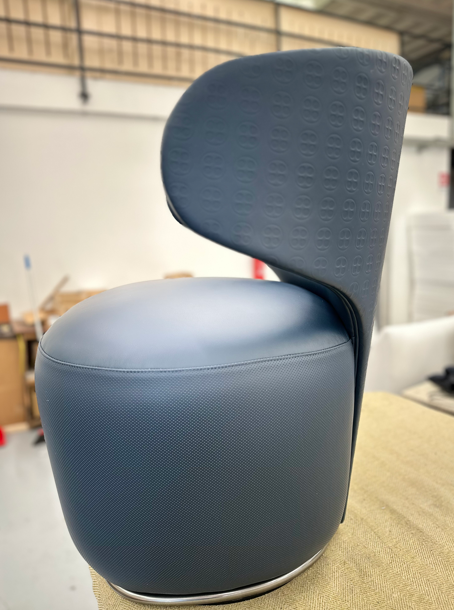
MAD Imbottiti is a luxury upholstered furniture manufacturer in Brianza, Italy. Production includes standard items and bespoke projects, organised as a job shop.
The analysis examines a production environment in which each product requires careful consideration of materials, operator skills, manufacturing stages and aesthetic requirements. Craft quality remains essential.
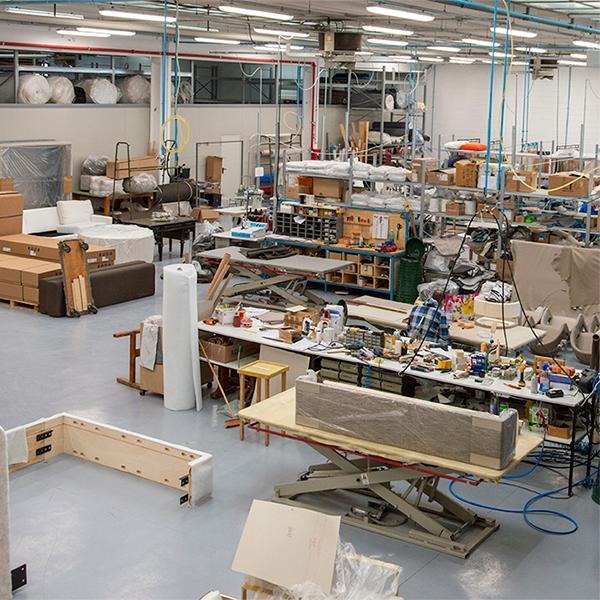
people in the production organisation described
main areas: cutting, sewing, assembly
share of standard products in the analysis
share of bespoke products in the analysis
Luxury furniture manufacturer in Mariano Comense, Brianza, a region closely linked to skilled craftsmanship. Partner to major Italian furniture names.
Part of the Roda Group. The presentation mentions production and commercial operations in Bangkok, Thailand, North America and Canada, with cooperation among managers across locations.
Armchairs, sofas, chairs, poufs, beds and outdoor furniture for restaurants, hotels, lounge bars, venues and luxury homes.
Work is planned across three processing islands. 18 people: cutting 3, sewing 7, assembly 6, planning and supply chain 2.
Processing time varies by product, materials and the operator's technical skills. The company culture stresses close cooperation with craftspeople.
70% standard products, 30% custom products. Custom quotations are especially challenging because jobs differ from one another.
Meet committed delivery dates and initial budgets without unnecessarily extending production time, while preserving the quality of bespoke upholstered furniture.
Improve planning and assembly so that completed products are delivered on schedule.
Avoid repeated work that increases labour, energy and materials expenditure.
Coordinate the provision of frames, bases, fabric and collection transport by the customer or project manager.
Combine artisan craft standards with an efficient, productive organisational process.
Apply Kaizen to repeatable products; the presentation cites a ten-month improvement journey for a standard item.
MAD measures processing times and methods used in production.
Deliver a “perfect” product for the luxury-furniture market. The thesis mentions an average price of approximately €4,000 for an armchair as context for the exacting quality expectations.
The furniture must fulfil its intended function.
Symmetry and clean lines are essential.
Stitching should be continuous, accurate and free from loose threads.
Fabric and finishes must be first-class.
Respond to varying products, materials and craft skills without compromising standards.
For bespoke orders, the experience of craftspeople and the Supply Chain Manager is crucial. The study identifies problems when knowledge, past defects and design decisions remain largely in people’s memories.
Imprecise photographs and drawings can make it harder to define the work and prepare reliable quotations.
The history of orders, variations and defects is not organised in an easily accessible repository.
Involving craftspeople only once production starts can lead to revisions, rework and delays.
Custom jobs often start with a photograph of a similar piece and a description of the desired furniture. Small differences can affect quotations. The Supply Chain Manager studies the stages, relies on remembered precedents and produces the executive drawing.
Knowledge about past defects is handed down verbally, without an easily searchable digital order archive.
In the described process, craftspeople are mainly involved during manufacturing. Late problems lead to process redesign or rework, including fabric changes.
These can increase energy, material, labour and delivery times. The thesis also notes limited use of prototypes and the opportunity to group bespoke items into similar product families.
The order workflow differs for standard and bespoke products. The research primarily examines bespoke orders, for which design and quotation rely on case-specific assessments.
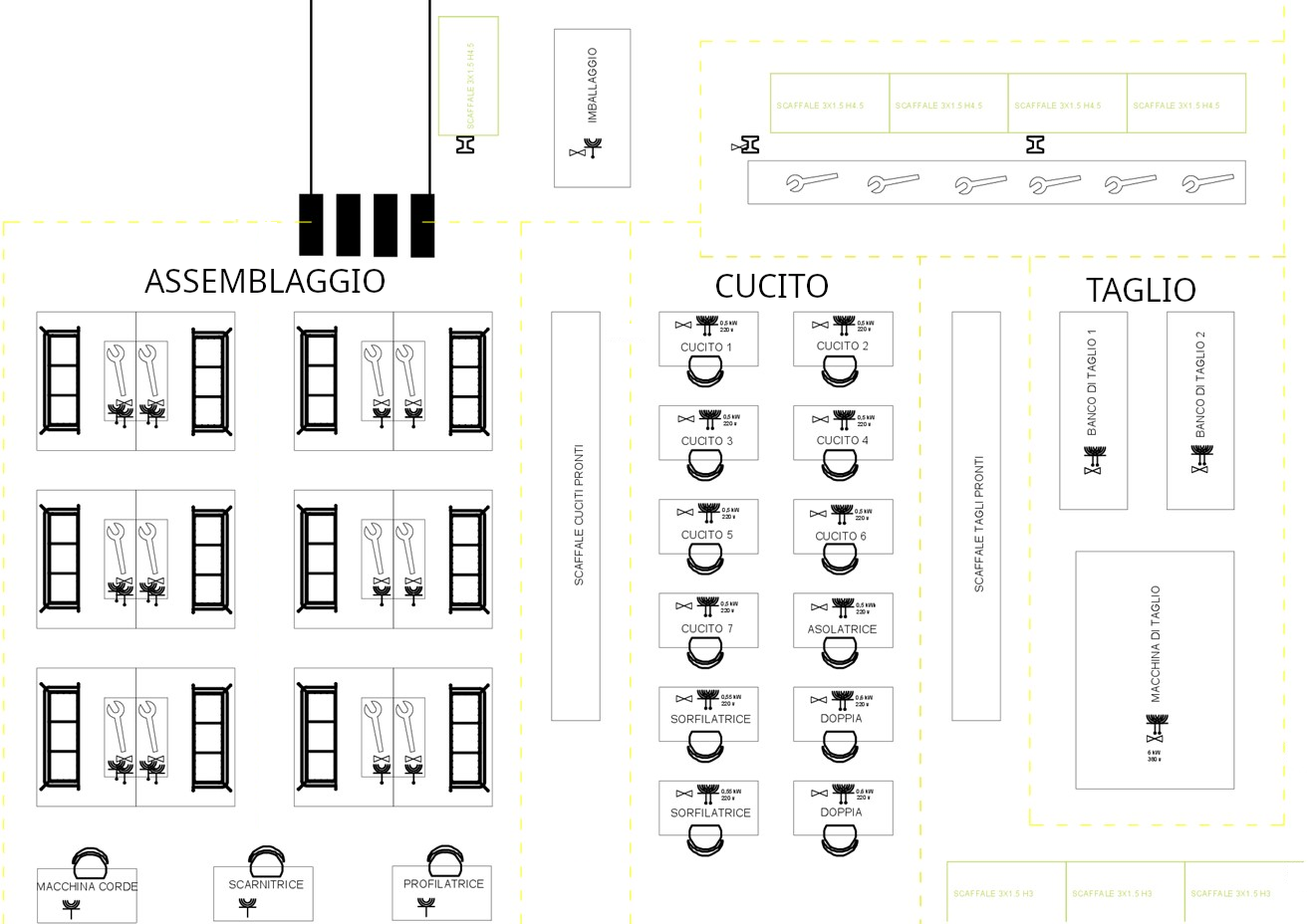
The thesis reports 3 employees in cutting, 7 in sewing, 6 in assembly and 2 in planning / supply chain management.
Operations vary by product, material and skill: this is why the initial analysis affects the ability to meet deadlines and budgets.
The presentation separates standard catalogue orders from bespoke orders requiring a tailored manufacturing process.
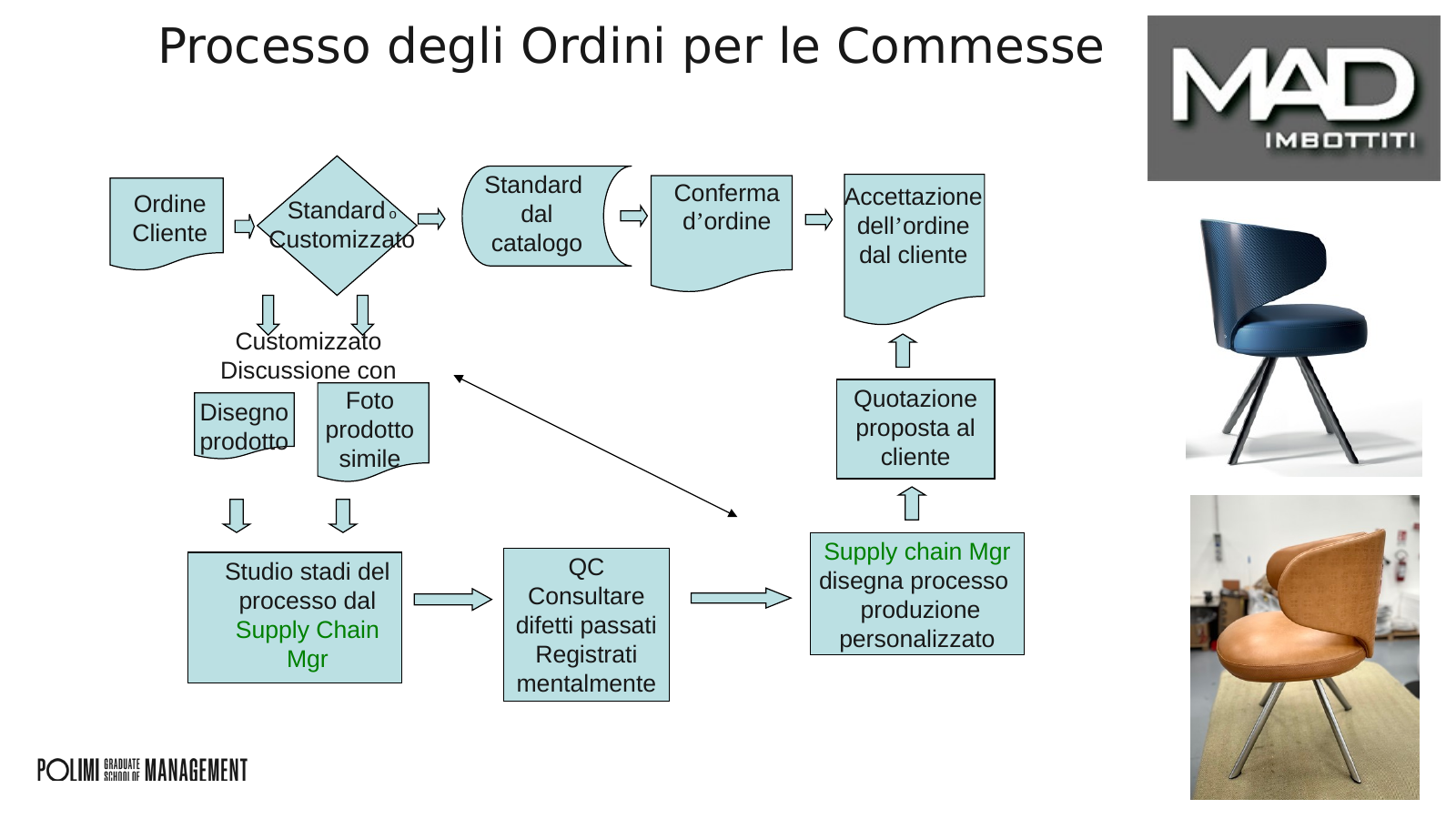
The request is received.
Order classification.
The standard article is identified.
The order confirmation is prepared.
The customer approves the order.
Product drawing and photo of a similar product.
Supply Chain Manager studies manufacturing stages.
Past defects are consulted through experience and mental recollection.
Supply Chain Manager designs the manufacturing process.
Quotation is submitted to the customer for approval.
In the process studied, artisans typically become involved during production to resolve practical issues; this may require redesign and rework.
A faithful reconstruction of the sequence illustrated in the presentation Gantt: nine activities across June and July 2024. The bars retain the positions shown in the original screenshot.
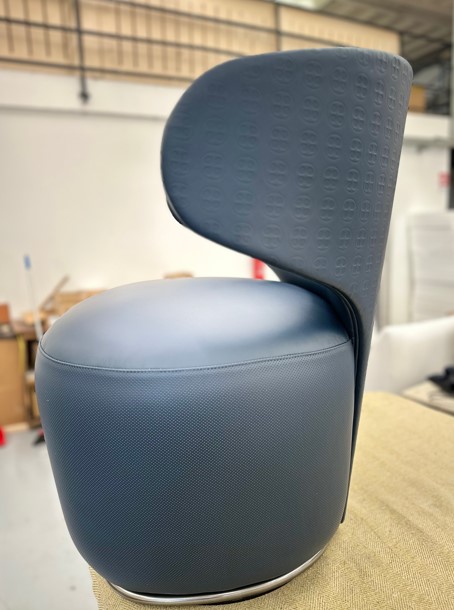
The presentation documents furniture production through photographs, from structural frames to successive upholstery and covering stages. Images are taken directly from the project slides.
Data reproduced from the table on slide 13. These cases do not constitute an aggregate performance measurement.
| Order | Finding reported in the analysis | Reported outcome |
|---|---|---|
| Inedito chair | Small photograph and insufficient detail; revisions to the item, fabric and stitching. | 6 weeks late |
| Bali cushion | No issues reported. | On time |
| Pag sofas and chairs | Extensive prototyping. | On time |
| Pouf Meridiani — Gino | Standard product optimised through 10 months of improvement. | On time |
| Club House — Brook Street | Bespoke product not previously manufactured. | 1 week late |
| Eclipse chairs — Turri | Moved from bespoke to standard, supported by established production experience. | 1 week early |
Complete transcription of the seven cases in the presentation, including planned and actual timing, causes, corrective actions and reported variances. Blank or ambiguous source fields remain marked as not specified.
| Order / case | Production start | Expected delivery | Trigger / issue | Response / solution | Actual delivery | Variance |
|---|---|---|---|---|---|---|
| Inedito chair | Wk 32 | Wk 36 | Small photo with insufficient detail | Item reworked with changed fabric and stitching | Wk 42 | 6 weeks late |
| Bali cushion | Wk 36 | Wk 39 | None | Not indicated | Wk 39 | On time |
| Pag sofas and chairs | Wk 6 | Wk 43 | None | Extensive prototyping | Wk 43 | On time |
| Meridiani – Gino pouf | 7/8, wk 32 | Wk 41 | None | Standard product optimised over 10 months; assembly only | 11 Oct, wk 41 | On time |
| Club House – Brook Street (RL) | 2 Sep, wk 36 | Wk 42 | Not specified | Previously unproduced bespoke product | 17 Oct, wk 42/43 | 1 week late |
| Eclipse chairs – Turri (OC444) | 6 Aug, wk 32 | 17 Oct, wk 42 | Not specified | Bespoke-to-standard transition; Turri prototype; 4 years of production experience | 11 Oct, wk 41 | 1 week early |
| Int. Market | Quote Feb 2024; drawing approval May 2024; materials 1 Oct | 30 Sep wk 40; 30 Oct wk 44 | Materials not supplied for all units; frame modifications | Not indicated | Not indicated | Not planned / unquantified |
Weeks, dates and entries are retained as reported in the original material; “Int. Market” contains incomplete/ambiguous entries and is not treated as a measured delay.
The customer must supply the necessary elements in time for the production schedule.
A moderate increase in early planning work may be needed to prevent later rework.
Brand-new bespoke projects cannot always be repeated or standardised.
The improvement must protect and involve the know-how of skilled craftspeople.
The customer expects exceptionally accurate finishing and an item made to the highest standard.
Revisions during manufacture can increase labour, energy and material consumption and delay deliveries.
The thesis proposes earlier analysis, digitised knowledge and the integration of craftspeople’s input during order preparation. The actions shown here are recommendations, not measured improvements.
Store similar products, orders, defects, variations and solutions to support future assessments.
Use prototypes and models, including scale models, to assess feasibility at an earlier stage.
Bring production expertise into process definition from the outset.
Improve the quality of incoming information through clearer photographs, drawings and specifications.
Build on experience from repeatable orders that can gradually be standardised.
Focus on controllable processing time, distinguishing it from factors outside production.
The proposed process preserves the standard catalogue route while strengthening the bespoke route with early artisan involvement, 3D prototyping and a shared order-history database.
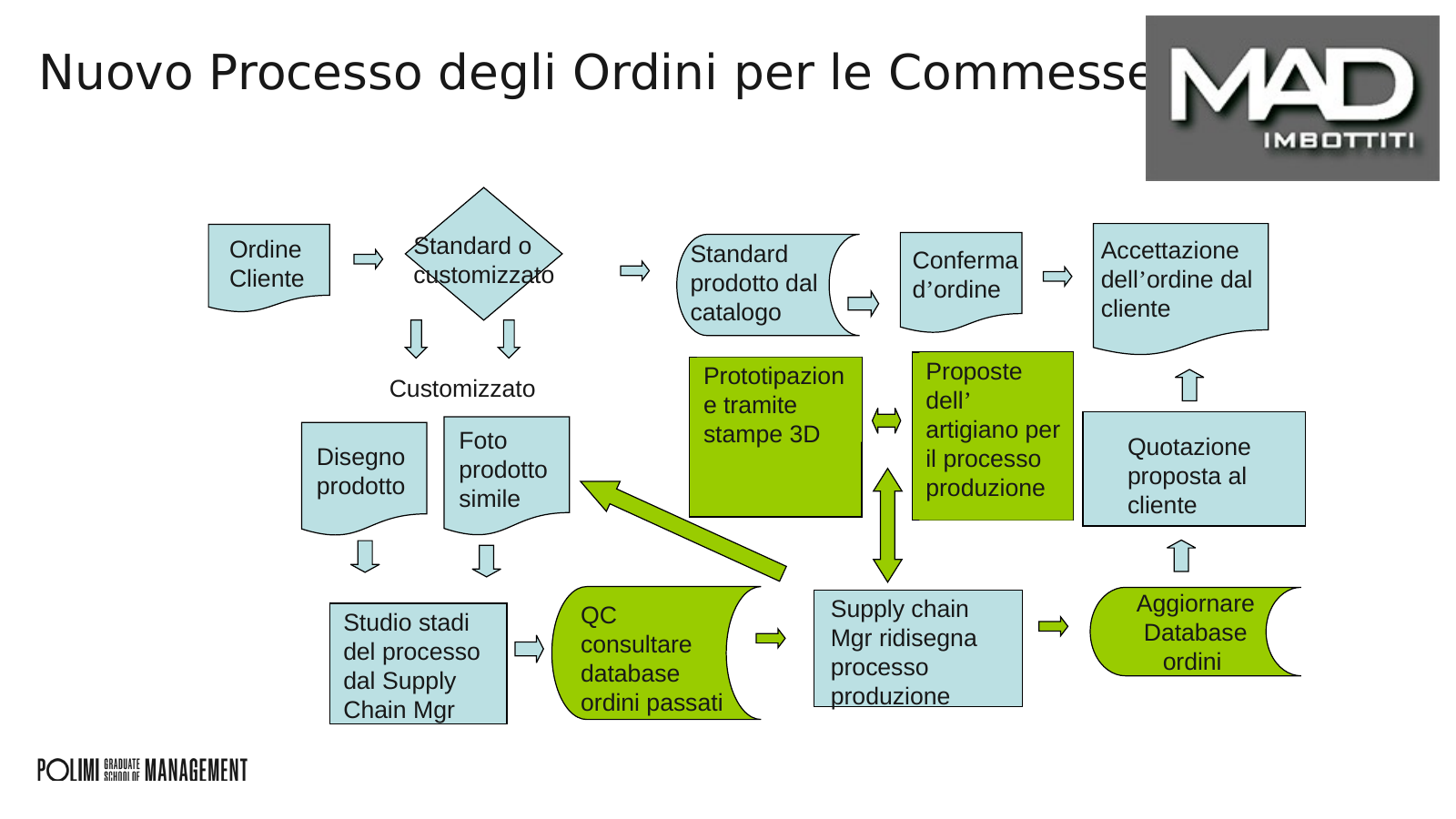
Order is received.
Catalogue item is identified.
Confirmation is issued.
Customer approves the order.
Collect product drawing and image of a similar product.
Supply Chain Manager studies the required stages.
Quality Control consults recorded historical defects and previous orders.
Evaluate models or 3D-printed prototypes early.
Appropriate craftsperson contributes ideas to the production-process definition.
Supply Chain Manager develops the customised manufacturing plan.
Present the proposal and quotation for acceptance.
Update the order database after the job for continuous improvement.
The project’s challenge is to introduce methods and transferable knowledge into luxury production without sacrificing product uniqueness and quality.
Investing more effort in design can be justified when it prevents errors, wasted materials and repeated work. The thesis also recognises constraints: timely customer-supplied inputs, the complexity of one-off products and variable production loads.
Qualitative research conclusion · no invented ROI or percentage improvement.
Document previous jobs, defects and solutions instead of relying only on memory.
Anticipate feasibility reviews with physical or digital models.
Bring the right artisan into the design process as soon as possible.
Improve drawings, photos, specifications and early communication.
Keep improving and stabilising processes for recurring products.
Measure and improve process time, the variable more directly under operational control.
These are recommendations from the research, not claims that a measured ROI or percentage reduction was achieved.